Reviewed by Pradeep Kumar
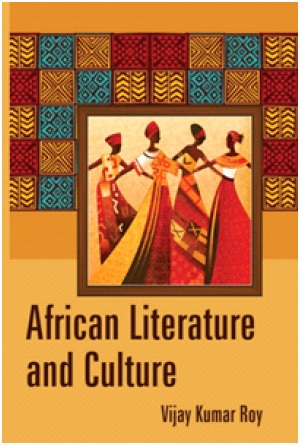
African literature is famous for its slave narratives, protests against colonization, calls for independence, African pride, hoping for the future, and dissent. It is characterized by a rich history of oral tradition, diverse written works, and thematic explorations of colonialism, liberation, and cultural identity. Vijay Kumar Roy’s latest book African Literature and Culture puts together most of the themes that are prevalent in African literature and culture. This book has 15 quality research articles on diverse topics covering almost the entire literary and cultural aspects of African continent. The book is divided into three parts and each part consists of five scholarly articles that are based on similar themes to a great extent. By reading them, one can easily get the whole scenario of what is/was going on in the contemporary African society.
African continent has faced trauma emerging from wars, racism, poverty and illiteracy. The people there suffered a lot and they are still deprived of their basic needs and rights. Research articles in Part 1 deal with the themes of violence, patriotism, war and its aftermath and show us the harsh reality of African people. Dr. Roy has selected the article of Robert Obioha who marvelously depicts the role of women in Biafra War and shows us how they helped the society in a hostile environment by providing essential items. Similarly, Ogoke’s research shows the trauma and its post-traumatic experiences during the dictatorship from 1966 to 1999. Evelyn Nwachukwu Urama’s work is a sociological and politically oriented study of Nigeria, particularly Northern Nigeria, in 1914 which deals with corruption, ethnic conflicts, and lack of emotional solidarity that ultimately weaken and shake national unity. Urama’s article exhibits the narrowing impact of apartheid- South Africa’s government-enforced system of racial segregation on the lives of both the black and white South Africans. Clement Eloghosa Odia critically examines the relationship between poetry and geography in the light of Geo-criticism. It portrays the violence of notorious Boko Haram which causes the anguish and anxiety, torment of torture, and angst and agony in the villages destroyed by them.
Roy’s book also deals with the themes of gender inequality, education, aesthetics and child education in its second part. In this part he accumulates the articles which are the examples of depth study of the contributors. For example, Clara Ijeoma Osuji’s work explores the intersection of gender, patriarchy and child education, and strengthens the debate of gender based discrimination. Deborah Abayomi Olutimi examines the powerful voice raised against the horrific social and political conditions caused by the politicians. Leonard Obina Onwuegbuche glorifies the personality of the oral artist in the realization of the oral art forms. James E. Onyeashie proposes that biographical theory of criticism should be given equal attention and importance as biographies and autobiographies have higher social vision than a work of fiction. And, the works of Charity Oghogho Oseghale and Sophia Akhuemokhan examine the problems, distress and emotional agitation faced by the involuntary childless heterosexual couples in a society where child birth, after marriage, is considered mandatory.
The third part of the book deals with the themes of child abuse, prostitution, and homo-sexuality that prevail in almost every society of the world. Akanegbu Chikamnene Onyinye’s article addresses the issues of age-long existence of supernatural beliefs in the lives of African people as manifested in different forms in daily activities and rituals, whereas, Nwachukwu and Ogoke in their research explore the treatment of lesbianism and try to establish the fact that Adimora-Ezeigbo is a hetronormative thinker, and lesbianism is a study of lesbian identity and the bildungsroman journey of self-discovery. Oseghale examines how children in Nigeria are forced to engage in the inhuman acts of prostitution and street hawking to prop up their destitute families and indigent person, and denounces the institutional failures to provide dignified life to them. In his second article, Ogoke studies woman’s sexuality and sensuality through the lens of Freud’s psychoanalysis.
This book edited by Vijay Kumar Roy is a wonderful and serious attempt to bring together the diverse topics of African literature and culture that need to be addressed even today. It will not be an exaggeration to call this book a true guide to African literature and culture. I strongly suggest that the students of English literature and criticism should go through this book and get benefitted by the vast reservoir of Africa.