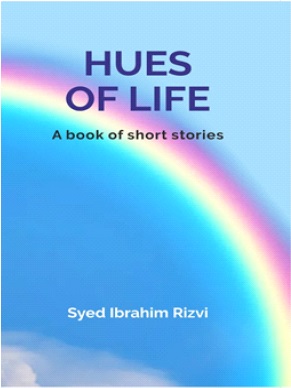
Reviewed by Manish Kumar
Syed Ibrahim Rizvi’s Hues of Life weaves together themes of love, societal expectations, personal choice, and the interplay between tradition and modernity across various narratives. The collection explores the complexities of relationships, the struggle against societal norms, the impact of choices on life’s trajectory, and the contrasts between traditional beliefs and modern advancements. Through stories set in diverse settings—from university campuses to traditional villages and Mumbai’s underbelly—Rizvi delves into the emotional landscapes of characters navigating love, loss, power dynamics, and the quest for identity amidst change. Each narrative, rich in emotional depth and societal critique, reflects on the human condition and the relentless pursuit of personal fulfillment and societal acceptance.
His narratives masterfully intertwine the complexities of traditional values versus personal desires, societal judgement, and the consequences of decisions, showcasing the divergence of early promise under societal pressures. The collection explores power dynamics, innocence, resistance against corruption, and the impact of generational shifts on personal identity and family bonds. It also delves into the dichotomy of belief and rationality, critiquing the exploitation of faith and the resilience of the human spirit amidst modernization’s impact on traditional societies.
Rizvi’s narrative technique across Hues of Life combines linear progression with strategic flashbacks, effectively weaving together the past and present to develop character arcs and build tension. The structure is adept at capturing the passage of time, integrating moments of joy, sorrow, and everyday life, thereby reflecting on aging, love, and societal changes. This methodical organization enhances the storytelling by highlighting transformations, internal conflicts, and leading to climactic resolutions that challenge characters’ beliefs and reveal their depth, blending suspense, emotion, and critique seamlessly. The stories showcase a writing style
The stories showcase a writing style that is both evocative and fluid, masterfully capturing the nuances of human emotion and the complexities of life’s journey. Through engaging prose and rich detail, Rizvi navigates the spectrum of youthful exuberance to the contemplative depths of adulthood. His narrative voice adeptly shifts tones, reflecting the emotional landscapes of his characters from hope to despair, and from nostalgia to a forward-looking optimism. This stylistic approach, combined with vivid descriptions and lively dialogue, immerses readers in the diverse settings and lives depicted in the collection, offering a deep, empathetic understanding of the characters’ experiences.
The characters in the collection are intricately developed, showcasing a broad spectrum of human emotions, challenges, and growth. From Sumaira and Javed’s evolving relationship to Zeba and Jawed’s transition from idealism to realism, each character’s journey is deeply explored. The narrative provides insights into personal struggles, motivations, and the impact of decisions, highlighting characters like Salim, Hera, Javed, and Jabir, among others. Their stories reflect the complexities of life, making the characters relatable and their experiences resonant with readers.
The settings in Hues of Life range from vibrant university campuses and the serene beaches of Goa to the gritty streets of Kamatipura and the traditional village of Jagdishpur. These diverse locales serve not only as backdrops but also as integral elements that reflect and influence the narratives’ themes and characters’ emotional journeys. Through detailed descriptions, Rizvi crafts settings that encapsulate the essence of each story, from the vibrancy of youth and the complexities of societal norms to the struggles for dignity and justice in challenging environments.
The stories in the collection deeply resonate, engaging with themes of growth, love, societal pressures, and the impact of choices on life’s trajectory. Each story evokes a spectrum of emotions—nostalgia, empathy, outrage, and a deep connection to the human experience, underscoring the strength found in love, the pain of loss, and the passage of time. Rizvi’s stories invite reflection on societal norms, the impermanence of moments, and the enduring human spirit, highlighting the importance of understanding, forgiveness, and the challenges at the intersection of tradition and modernity.
Further, Rizvi’s stories in this collection draw thematic parallels with classic and contemporary literature, offering a fresh perspective on timeless themes of love, societal expectations, personal growth, and the struggle against oppression. By setting his narratives in contemporary South Asia, Rizvi blends traditional values with modernday dilemmas, providing unique insights into the complexities of relationships, cultural transitions, and the dynamics of power and vulnerability. His work echoes the thematic depth of authors like Kazuo Ishiguro and Jhumpa Lahiri, while offering a distinctive lens on the human condition and societal challenges.
Highly recommended for readers interested in exploring the multifaceted dimensions of human life, Rizvi’s stories offer a deep dive into cultural, societal, and personal dynamics. With its rich character development, emotional depth, and engaging narrative, this collection appeals to those who appreciate contemporary fiction that combines personal drama with social commentary, delves into the nuances of human relationships, and examines the complexities of societal change. Readers looking for stories depicting thoughtful exploration of the human condition, family bonds, and the realities of life’s challenges may find for themselves an ideal destination in this collection.
Each narrative, from “Of Black Tuxedo and Maroon Sari” to “When Belief Came Crumbling,” showcases Rizvi’s exceptional ability to weave complex emotional narratives that resonate deeply with readers. The collection is celebrated for its compelling narratives and insightful commentary on life’s complexities and societal dynamics, despite occasional feedback on pacing and the desire for more explicit resolutions. Overall, the stories are memorable additions to contemporary Indian English Literature, offering rich character studies and reflections on the human condition.