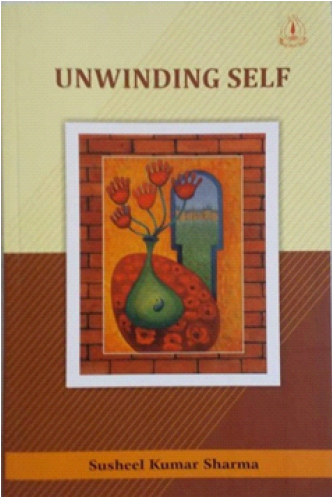
Reviewed by Krishna Gopal Srivastava
One of the greatest theoreticians of poetry, Mammta, in his immortal poetics called Kavya Prakash classifies all poetry into three categories: ‘Dhvani kavya’, ‘Gunibhutavyangyakavya’ and ‘Chitrakavya’. This classification is current as Uttam, Madhyama and Adhama. Unwinding Self, the third collection of 42 poems of unequal lengths, by Susheel Kumar Sharma, in my estimation, belongs to Mammata’s first category, viz. Dhvanikavya or Poetry of Suggestion. Each poem of the volume is illustrative of ‘Dhvani’ or Suggestion and deserves to be called first-rate poetry of Uttamkavya. This becomes amply clear when we get acquainted with the concept of ‘Dhvani’. We all know that there are three verbal powers called ‘Abhidha’, ‘Lakshna’ and ‘Vyanjana’. When a statement carries a meaning that is the product of the literal or plain sense of its words, we can say that the statement is ‘Abhidhamulak’ or based on the verbal power called ‘Abhidha’ or its most common and popular sense. For example, take up the sentence, “His name is Richard.” Here the sense is very clear and it causes no problem to its understanding. But consider the sentence: “Pen is mightier than the sword.” Here, the sense is not clear at all because the ‘pen,’ however large or well-built it may be, can never match a sword. Unless we take the metaphoric or symbolic sense of ‘pen’ and ‘sword’ namely, ‘scholars’ or ‘mediapersons’ and ‘soldiers’ respectively, the sentence will remain a problem. Here, ‘Lakshana’ or ‘Connotation’ is at work. But when a statement goes beyond its literal as well as its connotated meaning, the verbal power is called ‘Suggestion’ (Vyanjana). For example, take up the last line of “To Autumn” by John Keats, namely, “And gathering swallows twitter in the skies” where the idea of the infinity of Autumnal songs is suggested, transcending all limits of literalness (Abhidheyta) as well as connotationalness (Lakshanikata) of the word used in the line. ‘Dhvanikavya’ is based on the last verbal power called ‘Vyanjana’. The meaning accruing from the use of ‘Vyanjanakta’ or suggestive words is called ‘Vyangyartha’ or ‘Dhvanyartha’ and the resulting poetry is called ‘Dhavikavya’ or suggestive kind of poetry. In Mammata’s scheme of critical hierarchy, second stands the category of poetry called ‘Gunibhutavyangyakavya’ or the poetry where the suggested meaning is relegated to the ground and the literal meaning of the words used is what matters. Evidently, this category of poetry relies on the common sense of words, current among the speakers of the language concerned. The lowest division of poetry consists of poems that attract and impress the readers by their artfulness or ornateness – too much use of various poetic devices, tropes and figures of speech, exemplified by works like Ulysses and Finnegans Wake by James Joyce. Mammata’s division of poetry matches the category of the readers of poetry mentioned in the following verse of Vishnudharmottara Purana: